
Burning Glass Partnership Adds Fast, Actionable Labor Data to the NIC MAP Platform
Published Date: February 17, 2022
Last October, we signed a partnership with Burning Glass Technologies (Burning Glass), a leader in labor market data across multiple industries in the U.S. and beyond.
Together with Trepp, this data gave our clients a more transparent picture of the senior housing market and marked a major milestone for our platform. Then, like now, we believed Burning Glass data could help operators and other industry stakeholders better understand the senior housing labor market, plan effective hiring strategies, and anticipate future overhead.
Specifically, Burning Glass specializes in real-time jobs data. This sets it apart from the traditional source of labor data in the U.S.: the federal government’s Bureau of Labor Statistics (BLS). Gathered from the daily analysis of millions of job listings from more than 40,000 sources, Burning Glass data offers a near-instant pulse of the labor market.
For comparison, the BLS federal jobs report releases monthly, and other federal labor data can be more than two years old. Burning Glass’s real-time job-postings feed gives operators and other stakeholders a daily view of what employers are seeking — at a granularity BLS doesn’t reach. Burning Glass data also shows how job categories differ across markets, with detail on wages (hourly and annual), experience, and education requirements. BLS, by contrast, reports much broader categories such as Licensed Vocational Nurses, which together with its inherent delays makes it less useful for checking jobs in a specific market.
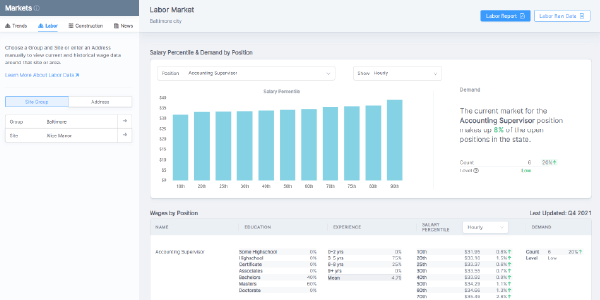
Burning Glass data is highly actionable thanks to its speed, specificity, and focus on new job postings — which gives operators agility on staffing decisions and gives underwriters timely context on labor-cost assumptions.
This isn’t to suggest Burning Glass data as a substitute for BLS data. BLS data — as Burning Glass themselves note — plays an important role in capturing the “big picture” trends in the U.S. labor market. While Burning Glass data delivers specific information about job postings in a real-time snapshot, the BLS data effectively tracks macro-level and historic trends. Put another way, Burning Glass data reveals “what is happening” (real wages), and BLS data shows “what happened” (posted offered wages). The two data sets are complimentary, and together form a more complete picture of the labor market.
Clients can find both BLS and Burning Glass data on our platform. The new Burning Glass data is now active for all NIC MAP clients with access to the Market Insight tool.
To learn more about what’s included in the Burning Glass labor data, how to access the Market Insight tool, or for questions about other labor data on the NIC MAP platform, speak to one of our product experts.